Here are some tweets from some of our favorite American wine writers…

Please follow us on Twitter @Lini910. We’ll follow back!

It seems like just yesterday that we asked whether or not Lambrusco could be the perfect Thanksgiving wine (well, actually, it was last week).

So it came as no surprise to us when the editors of Food & Wine published this piece on Friday: “What is Lambrusco — and Why It Could Be the Perfect Thanksgiving Red Wine.”

“A Thanksgiving dinner,” writes Jillian Kramer for the magazine, “is reason to celebrate — with a refreshing, versatile red wine, that is. According to the sommeliers we spoke with, Lambrusco is one of the best wines to pour for a holiday toast or to sip alongside a six-course meal.”

One of the wine professionals she talks to tells her, “the intense red fruit — think, cherry and strawberry — flavors of dry Lambrusco would complement game birds, turkey and ham,” some of the classic fixings for the Thanksgiving piece.

It’s a great article chock full of useful information about Lambrusco and why it works so well at a meal like the Thanksgiving feast.

Check it out here. And thank you, Jillian, for loving Lambrusco as much as we do!

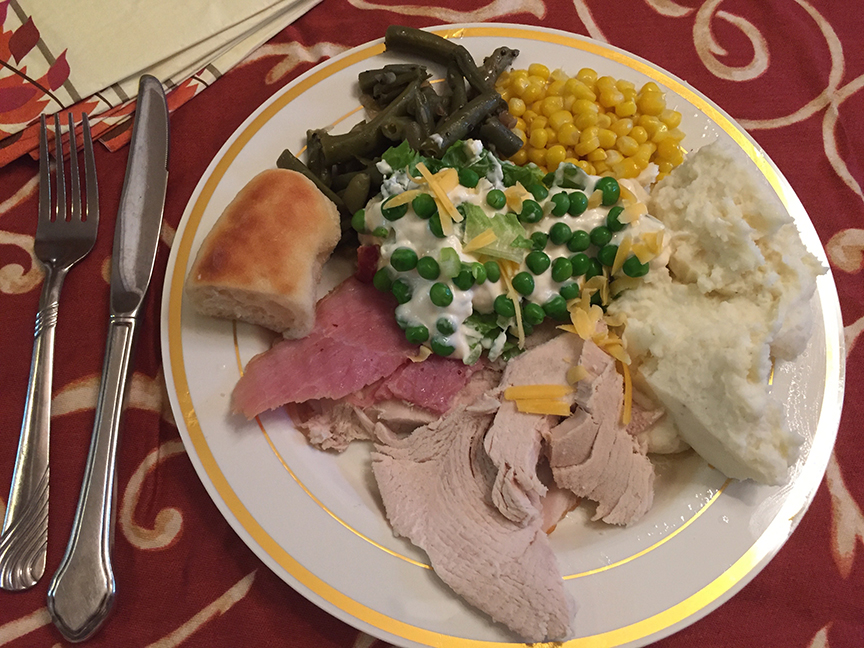
Photo: A Thanksgiving plate in Southeast Texas by our blogger Jeremy Parzen aka Do Bianchi.

We loved Eric Asimov’s column last week for the New York Times, notes from his yearly Thanksgiving tasting panel.

In it he writes:

    We emphasize that choosing wines for Thanksgiving is not an exercise in pairing. The meal — especially the sort of potluck buffet where guests bring all sorts of family favorites — is too complex and disparate to worry about precision matching.
    Instead, we suggest picking versatile wines that go with many different sorts of flavors. And we are wary of wines that are more than 14 percent alcohol.

Eric and his tasting panel didn’t taste or recommend any Lambrusco for this year’s Thanksgiving feast (although Eric is a HUGE Lambrusco fan and he has recommended Lini Lambrusco many times in his columns over the years).

But we really appreciated what he had to say about picking versatile wines that go with many different flavors.

That’s Lambrusco to a tee!

We were also struck by his advice: We are wary of wines that are more than 14 percent alcohol.

One of the best things about Lambrusco is its restrained alcohol, usually around 11 percent (far below the threshold that Eric recommends).

Another thing that he recommends is economy in selecting Thanksgiving wines. Each year, he caps the bottle price at $25.

He writes:

    We imagine an unruly feast, with lots of people, perhaps served buffet-style. For a big group, chances are nobody will want an exorbitant wine bill, hence our price cap.

Versatility in pairing?
Restrained alcohol?
Value?

The answer is spelled L I N I  L A M B R U S C O!

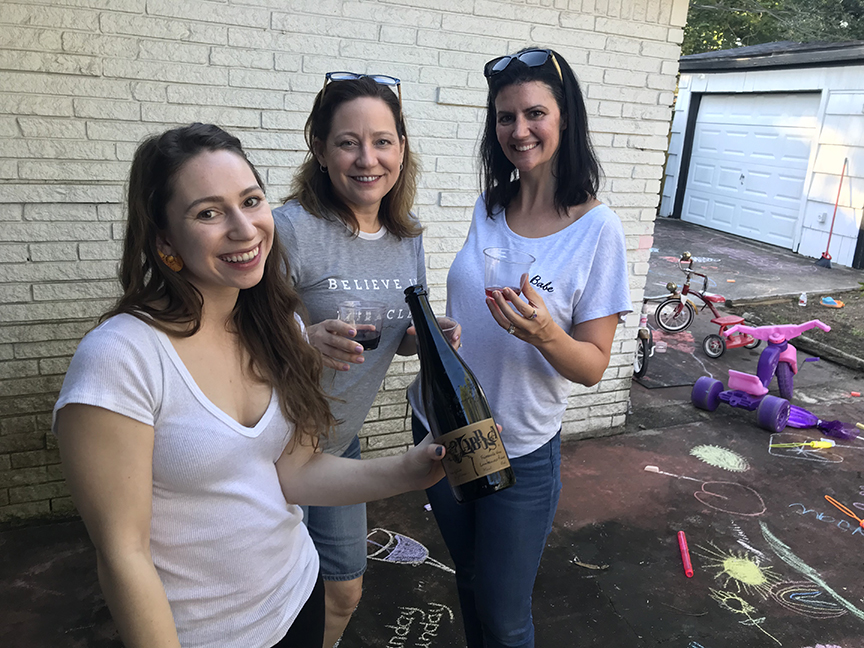
On Sunday, our American blogger hosted a “Lambrusco and BBQ” party in Houston, Texas where he lives with his family.

Unless you’ve been living under a rock, you already know that Texas BBQ (not just BBQ but TEXAS bbq) has become a worldwide phenomenon. Even in outposts as far away as Brooklyn and Rome (yes, no joke!) and Napa, smokers are smoking dry-rub brisket just like the way they do it in the Lone Star state.

In Texas, they pair either ice tea or beer with BBQ.

But, as our blogger has discovered over his years in Texas, Lambrusco makes for the ideal pairing: Served cold, with gentle bubbles, a hint of sweetness, and the right balance of acidity and tannin to cut through the heat and fattiness of the ‘cue (as they call it down there), Lambrusco is a natural match for this style of cooking. And it makes perfect sense: Even though they don’t smoke their meats in Emilia, the spiritual homeland of Lambrusco, there are many parallels between the heartiness of the two culinary traditions.

Like no other, Lini embodies the joy of the Emilian people and their favorite wine, Lambrusco. That joy was on display last Sunday in Houston.

This slideshow requires JavaScript.

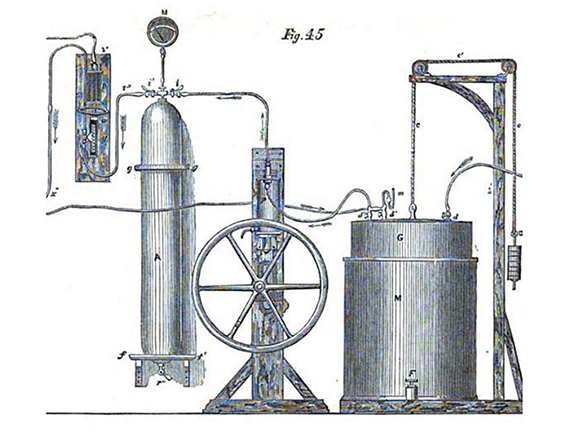
Above: A early prototype for what would come known as the “tank method.” Some people call the “tank method” the “Charmat method.” Others call it the “Martinotti method.” Here’s some background on how the tank method was developed (by our English-language blogger, wine writer and educator Jeremy Parzen). It’s part of our ongoing series on sparkling wine production.

By the end of the 1800s, the discoveries of Louis Pasteur (1822-1895) had radically changed the way wine was understood. The fact that he essentially created the field of microbiology and was the first to identify yeast as the key agent in fermentation, i.e., the conversion of sugar into alcohol, launched the new science of wine.

When he first announced and published his major findings in the 1850s, sparkling wine was already being made on a large scale in Champagne. And by the end of the century, one of the pioneers of sparkling wine science, Frenchman Edme-Jules Maumené (1818-1898), was already experimenting with methods for expediting the classic method or Champagne method of sparkling wine production.

The idea was to reduce the amount of time it took to achieve effervescence, which, was extremely time-consuming in a world without temperature-controlled fermentation where sparkling wine was produced exclusively in bottle.

It’s believed that Maumené was the first to experiment with second fermentation provoked in a large vessel rather than a bottle.

And it’s really he who invented the process by developing a bung and other apparatuses that allowed him to seal and pressurize the fermentation vessel.

But it was Italian Federico Martinotti (1860-1924), a Piedmontese, who first applied for a patent for a pressurized fermentation apparatus.

And then it was a Frenchman, Eugène Charmat, who patented a new model of pressurized stainless steel vat for the production of sparkling wine in 1907.

There are many variations of Charmat’s name (he’s more frequently called Auguste Charmat). And nowhere can I find his year of birth and year of death.

I believe that his name was Eugène because there are English-language documents that show him to be the owner of the patent for a process for “decanting sparkling wine and other fermented drinks.”

The bottomline is that it was most likely Maumené who discovered a method for the production of sparkling wine in pressurized vessels. Martinotti most likely refined the process and applied it on a commercial scale in northwestern Italy. And it was Charmat who designed and patented the pressurized tanks that would become the standard for the production of closed tank sparkling wine production.

Jeremy Parzen
Lini blogger

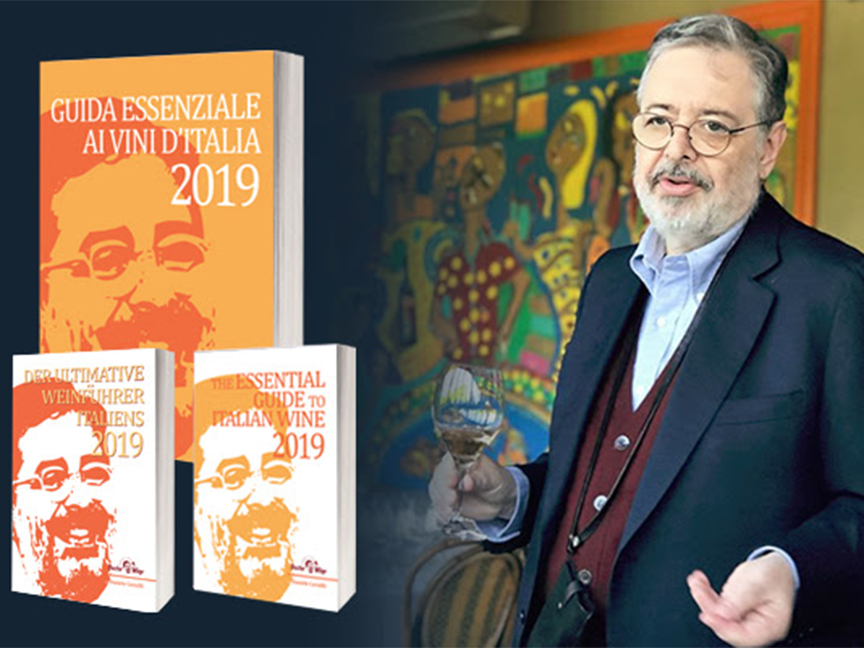
We were thrilled to learn that leading Italian wine writer Daniele Cernilli (aka Doctor Wine) and his editors have named Lini’s 2006 In Correggio Rosso Millesimato a “best monovarietal wine” in its category (Lambrusco), giving it a whopping 95 points.

Earlier this year, Cernilli wrote that the wine is “not only the best Lambrusco of the year, it’s one of the best ever.”

(He and his editors awarded it “best Labmrusco” in their 2019 guide to the wines of Italy, which was published this month.)

Jaynes Gastropub helped us get the party started when we held a Lini Lambrusco garden party in San Diego back in July of this year.

In the meantime, a lot of folks have inquired as to where they can find the wines for purchase.

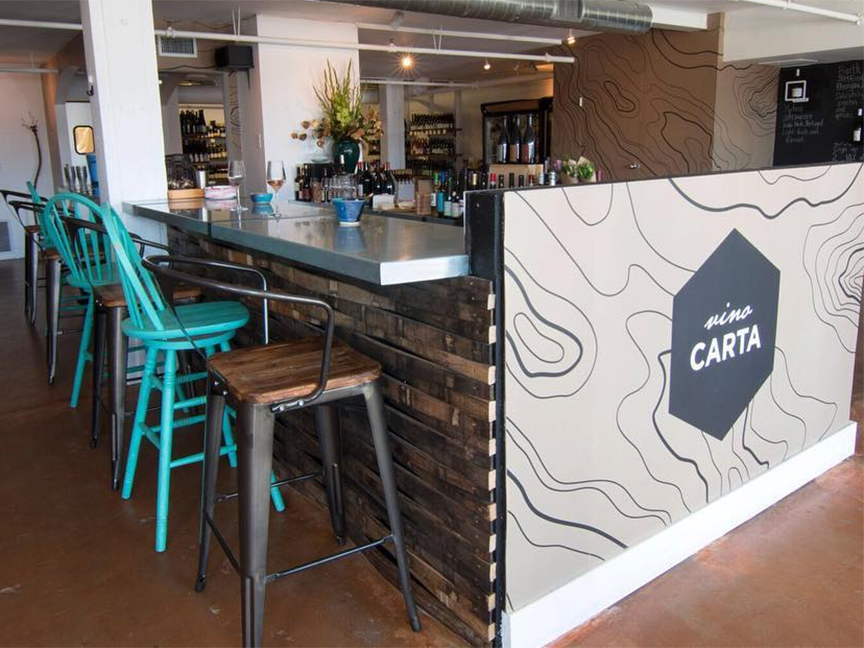
We were thrilled to learn that they are now available retail and by-the-glass at San Diego’s hippest wine shop, Vino Carta (in Little Italy in downtown San Diego).

San Diego’s fine wine scene has exploded over the last couple of years. We are so proud to be part of it!

Thank you, Vino Carta! We’ll come out and see you early next year.

Vino Carta
2161 India St.
San Diego CA 92101
(619) 564-6589
Google map

Image via the Vino Carta Facebook.

Here’s what Food & Wine magazine executive wine editor Ray Isle had to say about Lini Lambrusco when he first tasted them back in 2007 (“Not Your Grandmother’s Lambrusco”):

These are fresh, vibrant sparkling wines, ideal for summer drinking, and not overwhelmingly expensive, either.

Lini Lambrusco Blanco: White Lambrusco is actually quite common in Emilia-Romagna, though it’s virtually unknown here. Made without any skin contact, this has a scent of red apples and white grapes, and a racy zestiness that makes it an ideal aperitif wine.

Lini Lambrusco Rosé: Crisp strawberry aromas, and bright strawberry-cherry… This is made from the Sorbara grape variety, whose light skin naturally supplies the pale red color.

Lini Lambrusco Rosso: The brisk bubbles in this scour your tongue in an entirely appealing way, while the fresh, crushed-berry fruit and mild hint of earthiness give a hint as to how good this would be paired with a plate of grilled lamb chops.

Here’s what Los Angeles Times wine writer S. Irene Virbila had to say about Lini when she first tasted the wine (from the archives):

Lambrusco, the sparkling red wine from the Po Valley in Italy’s Emilia region, hasn’t had a great rep in this country. But when it’s made well, as in … “Labrusca” from Fabio Lini and family, who have been making the stuff since 1910, it can be a thing of rare beauty. Rich and lush, lightly sparkling and low in alcohol, it’s a perfect picnic wine for a hot summer day, great with salumi or your finest prosciutto, lusty pasta dishes and juicy grilled sausages.

Lini also makes an intriguing Lambrusco rose that you can find at some of the same shops as the red.

Runner’s World magazine isn’t exactly the kind of publication where you would expect to find a recommendation for Lambrusco. Or for any wine for that matter.

But a few years ago, Lini Lambrusco fan Joe Campanale — renowned American sommelier and restaurateur — published this piece for the masthead, “The Perfect Wine for Runners’ Favorite Foods: New York sommelier and marathoner Joe Campanale offers tips for pairing wines with various meals and desserts.”

His favorite runners’ food pairing for Lambrusco? Burgers.

“If you’re at a barbecue,” he wrote, “you want a wine that is cold yet pairs well with meat. Lini 910 Lambrusco Rosso is a terrific value.”

Who knew that runners were such big burger lovers?

A veteran runner of marathons and owner of some of New York’s leading Italian restaurants and wine destinations, Joe interviewed Alicia for a 2015 episode of “In the Drink,” the popular wine show on Heritage Radio Netowrk.